ADVERTISEMENT
Why the U.S. Is Leaving
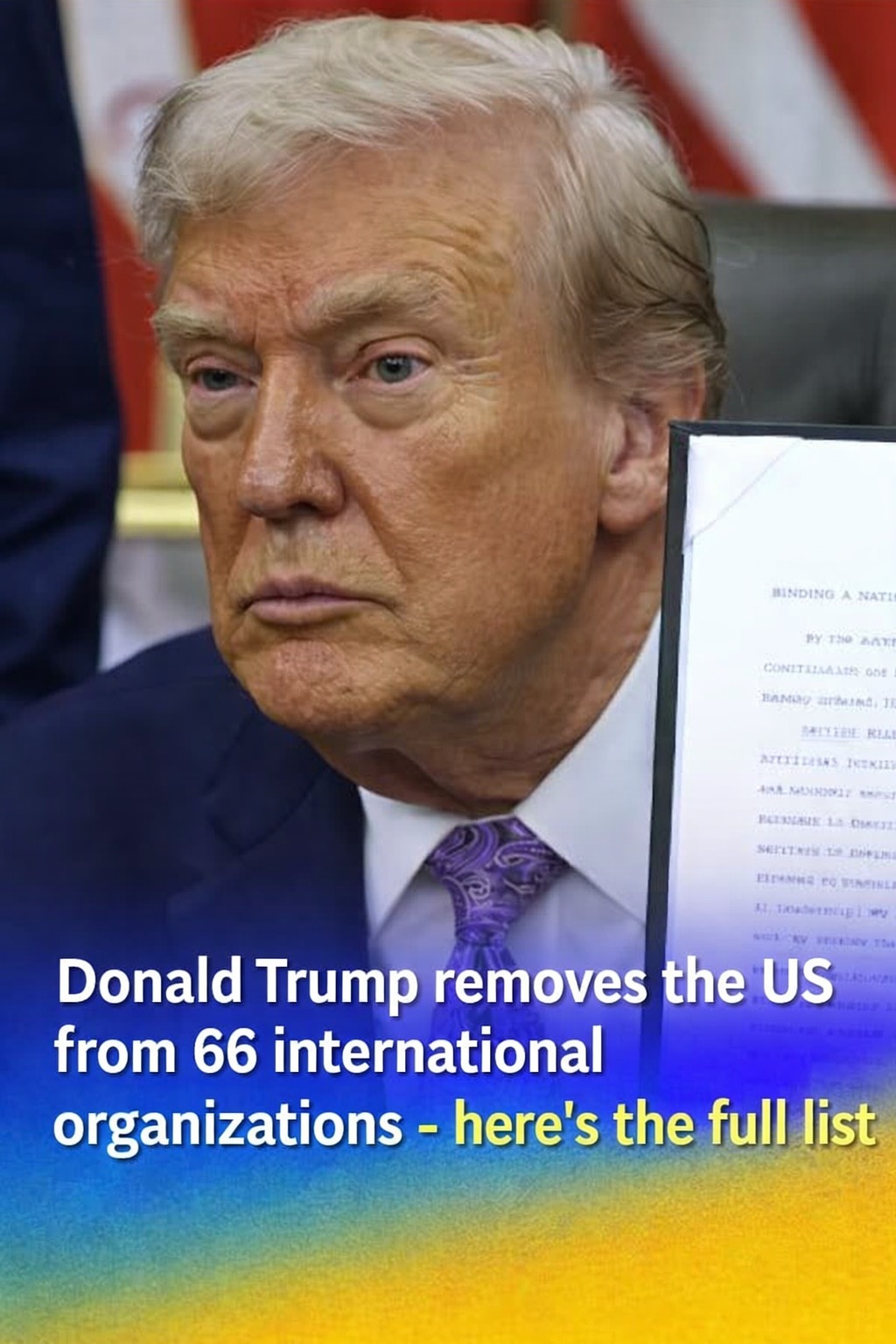
The Trump administration has framed the moves as part of its “America First” foreign policy, arguing that many global institutions promote agendas contrary to U.S. priorities or represent inefficient uses of taxpayer dollars. Officials have criticized organizations involved in climate policy, global governance, migration, labor and other areas they view as “ideological” or overreaching. (The Washington Post)
Secretary of State Marco Rubio and other administration leaders have described it as restoring U.S. sovereignty and independence on the world stage. (The Washington Post)
List of the Organizations the U.S. Is Exiting
The full list includes 31 United Nations entities and 35 non-UN international organizations. Below are highlights of many of these groups — covering a wide range of global functions.
31 United Nations-Affiliated Entities
Among the UN bodies from which the U.S. is withdrawing are:
- Department of Economic and Social Affairs
- UN Economic and Social Council (ECOSOC) regional commissions for Africa, Latin America and the Caribbean, Asia and the Pacific, and Western Asia
- International Law Commission
- International Trade Centre
- Office of the Special Adviser on Africa
- Special Representatives offices for Children in Armed Conflict; Sexual Violence in Conflict; Violence Against Children
- Peacebuilding Commission and Peacebuilding Fund
- Permanent Forum on People of African Descent
- UN Alliance of Civilizations
- UN Climate and Environmentrelated entities — including the UN Framework Convention on Climate Change (UNFCCC), a treaty-based body underpinning global climate negotiations and the Paris Agreement framework
- UN Democracy Fund
- UN Entity for Gender Equality and the Empowerment of Women (UN Women)
- UN Population Fund (UNFPA)
- UN Energy, UN Water, UN Human Settlements Programme
- UN Institute for Training and Research
- UN Oceans
- UN System Chief Executives Board for Coordination
- UN System Staff College
- UN Conference on Trade and Development (UNCTAD)
- UN Register of Conventional Arms (Al Jazeera)
These entities cover economic development, conflict prevention, gender equality, population health, climate cooperation and more. (Al Jazeera)
35 Non-UN International Organizations
The United States is also exiting a broad set of other international institutions, including:
- 24/7 Carbon-Free Energy Compact
- Colombo Plan Council — a regional cooperative for development
- Commission for Environmental Cooperation
- Education Cannot Wait — a global fund for education in crises
- European Centre of Excellence for Countering Hybrid Threats
- Forum of European National Highway Research Laboratories
- Freedom Online Coalition — digital rights group
- Global Community Engagement and Resilience Fund
- Global Counterterrorism Forum
- Global Forum on Cyber Expertise
- Global Forum on Migration and Development
- Inter-American Institute for Global Change Research
- Intergovernmental Forum on Mining, Minerals, Metals, and Sustainable Development
- Intergovernmental Panel on Climate Change (IPCC) — the UN’s top scientific climate assessment body
- Intergovernmental Science-Policy Platform on Biodiversity and Ecosystem Services (IPBES)
- International Centre for the Study of the Preservation and Restoration of Cultural Property
- International Cotton Advisory Committee
- International Development Law Organization
- International Energy Forum
- International Renewable Energy Agency (IRENA)
- International Solar Alliance
- International Union for Conservation of Nature (IUCN)
- Pan American Institute of Geography and History
- Partnership for Atlantic Cooperation
- Regional Cooperation Agreement on Combating Piracy and Armed Robbery Against Ships in Asia
- Regional Cooperation Council
- Renewable Energy Policy Network for the 21st Century (REN21)
- Science and Technology Center in Ukraine
- Secretariat of the Pacific Regional Environment Programme
- Venice Commission of the Council of Europe
…and others. (Legit.ng – Nigeria news.)
What This Means for the U.S. and the World
Supporters of the withdrawals argue that the U.S. is eliminating wasteful or ideologically driven commitments and redirecting taxpayer funds to domestic priorities. President Trump and his advisers have emphasized shifting focus to alliances that directly benefit U.S. security, economic strength, and sovereignty. (The White House)
Critics, including diplomats, policy experts and international advocates, paint a different picture: the withdrawals remove the United States from forums where global standards, information sharing, and cooperative action are crafted, potentially diminishing U.S. voice and leadership on issues like climate change, health crises, human rights, economic development and security. (AP News)
Some analysts say this represents a deeper retreat from multilateralism, with the U.S. pursuing bilateral or ad hoc engagements instead of participating in collective institutions created after World War II to promote stability and cooperation. (Financial Times)
ADVERTISEMENT
